
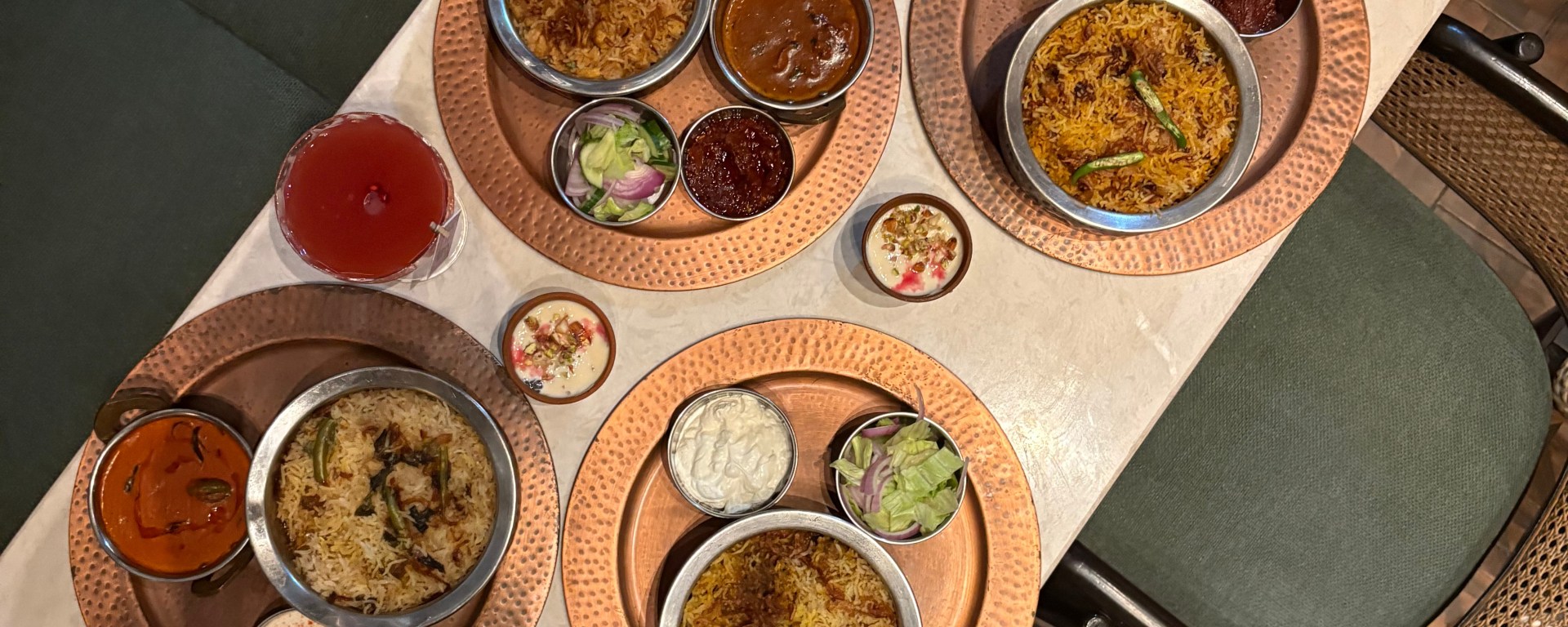
“Tell me what you eat, and I will tell you what you are,” declared Brillat-Savarin, that most eloquent of Frenchmen. Had he the fortune of traveling eastward, past Constantinople, through the Persian highlands, down the Silk Road and into the courts of Awadh, one suspects he would have revised his maxim entirely. For in the Indian subcontinent, biryani does not merely reveal what one is. It reveals, with considerable authority, where one has been, who one has loved, and which empire one has, knowingly or otherwise, inherited.
Governor Sahab, Radisson Blu Nashik’s magnificent tribute to the old-world social club, has long understood that fine dining is as much an act of civilisation as it is of appetite. And now, with the arrival of its World of Biryani, a festival menu of uncommon breadth and scholarly ambition, it has done something rather splendid: it has laid the entire subcontinent upon a table and invited you to eat your way through it.
Swadisht, Sugandhit, Aur Shandar, reads the invitation. Delectable, fragrant, and magnificent. One hardly needs persuading.
Of Persia, Patience, and the Minced Kebab
We begin, as all great journeys must, at the origin.
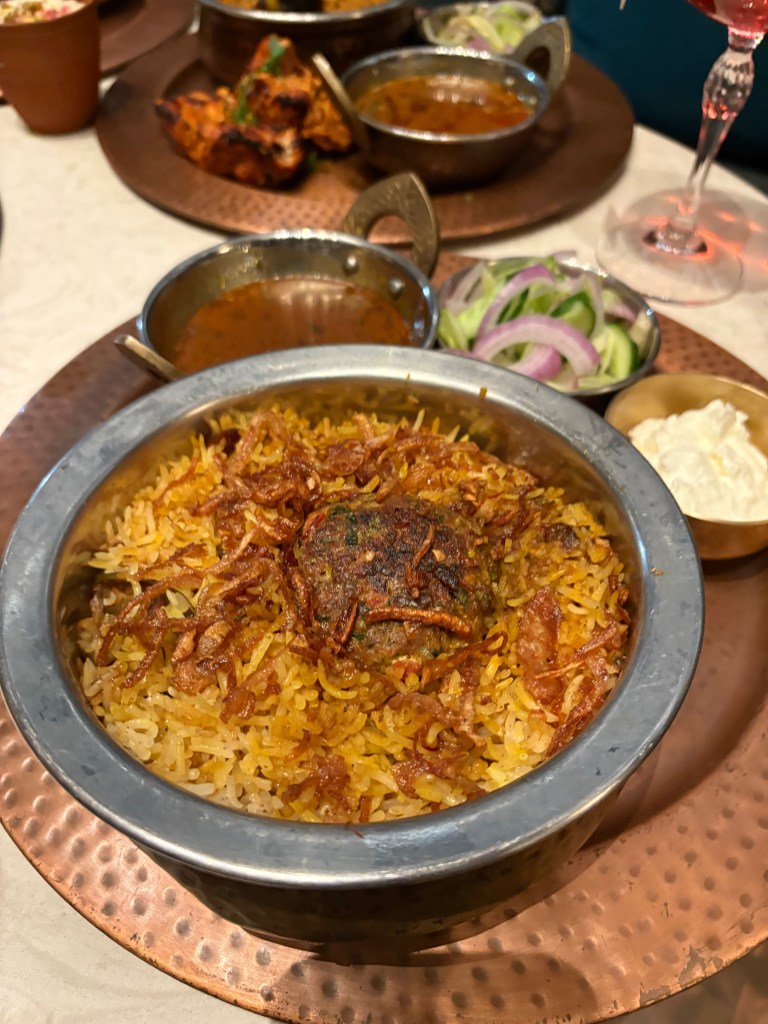
The Persian Biryani, known variously as Beryani or Biryani-Ye Isfahan, is the Ur-text from which all subsequent chapters were written. Minced mutton kebab folded into aromatic rice, it arrives carrying the fingerprints of Isfahan’s royal kitchens and the ghost of rosewater bazaars long since quietened by history. To eat it is to understand, in one mouthful, how a dish travels, how it boards a caravan somewhere in the Persian highlands and arrives, centuries later, transformed and triumphant, on a table in the Deccan.
Beside it, the Kacchi Biryani makes its case with the quiet confidence of a dish that requires neither introduction nor embellishment. Raw marinated mutton and fragrant rice, sealed together and surrendered to slow, patient heat. Dum cooking being, as any seasoned observer will attest, less a technique than a philosophy. The dum is broken at the table with the ceremony it deserves, releasing a plume of steam that is, frankly, as close to theatre as cuisine is ever likely to get. Served with salan and raita, it is the purest expression of the tradition: unhurried, uncompromising, unforgettable.
East of Awadh, South of the Spice Route
It is in the middle passages of this menu that Governor Sahab reveals the full, rather dazzling scope of its cartographic imagination.
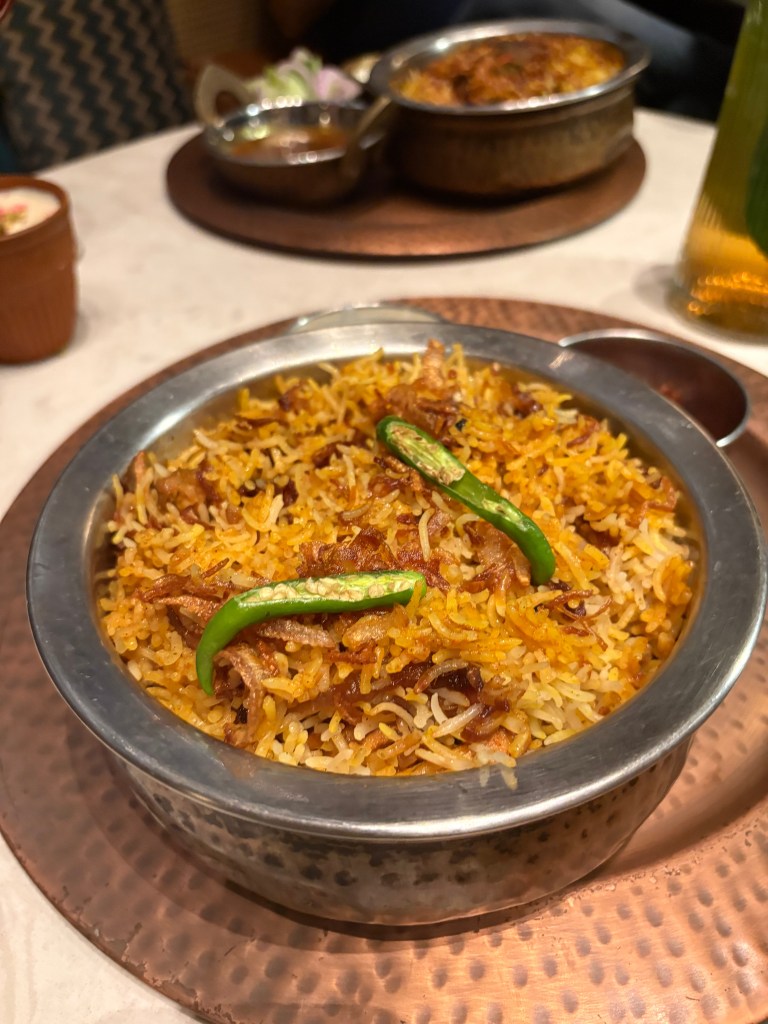
The Awadhi Biryani stands as the courtly standard, royal, subtle, and aromatic, as the menu notes with admirable economy. It is the preparation against which all others are measured, the Nawab’s own benchmark of refinement, and it holds its ground here with the serene authority of a dish that has never, in several centuries of existence, had cause to doubt itself.
The Mandi Biryani, arriving with Yemeni credentials, is a study in noble restraint. Tandoori chicken and slow-smoked rice carry in their depths the memory of a desert evening, the wood-smoke and patience of Arabian coastal cooking. Where the Awadhi perfumes, the Mandi lingers, different registers of the same ancient song.
And then, the menu’s most intriguing passport stamp, the Nasi Biryani, which sailed rather further than most. Malay-inspired rice with spices, chicken curry, and sambol, it is a reminder that biryani did not confine its ambitions to the subcontinent. It boarded dhows, crossed the Bay of Bengal, acquired new latitudes and new sensibilities, and returned enriched. One raises a glass, metaphorically of course, this being Governor Sahab’s admirably Indian bar, to the dish’s extraordinary powers of adaptation.
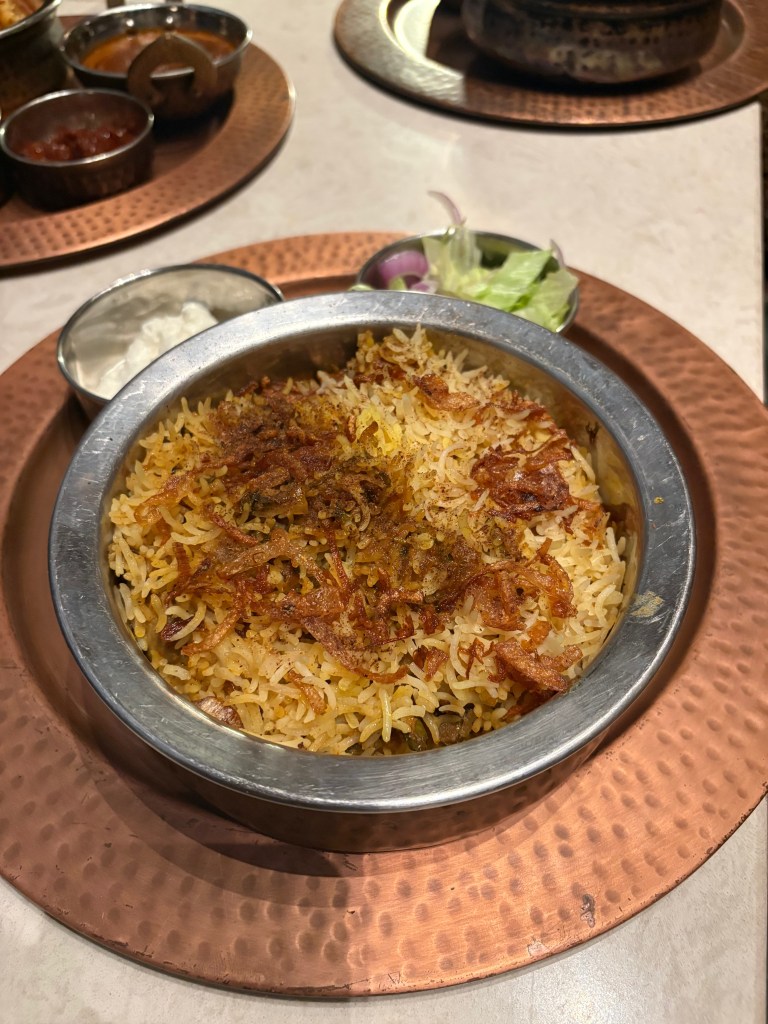
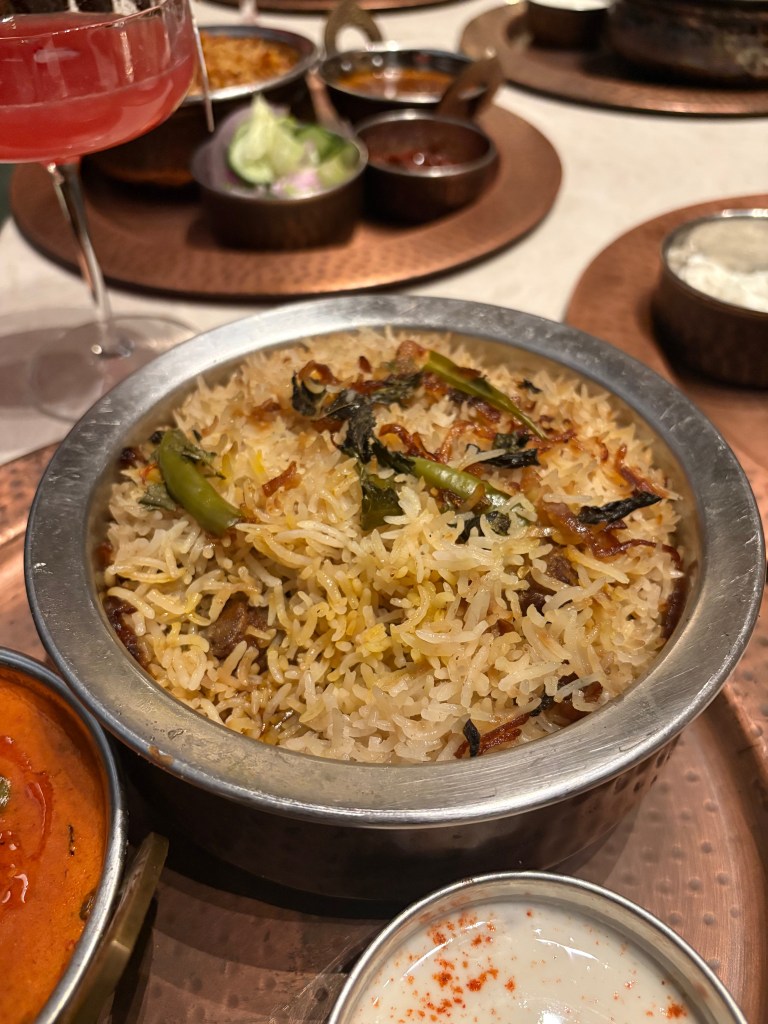
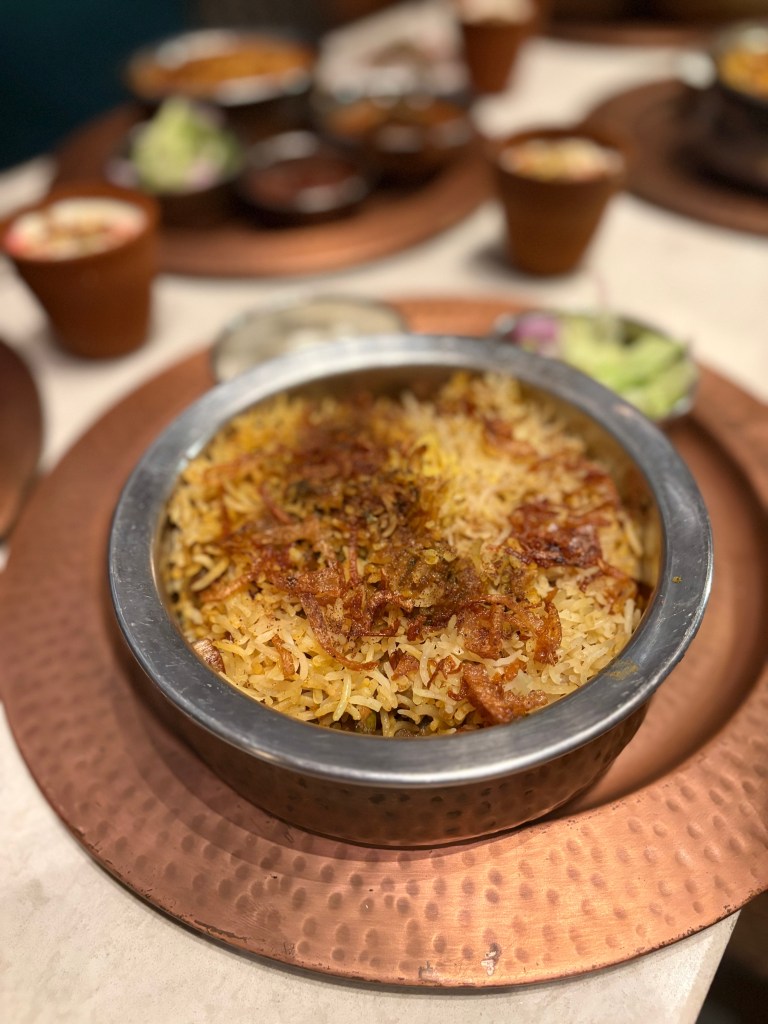
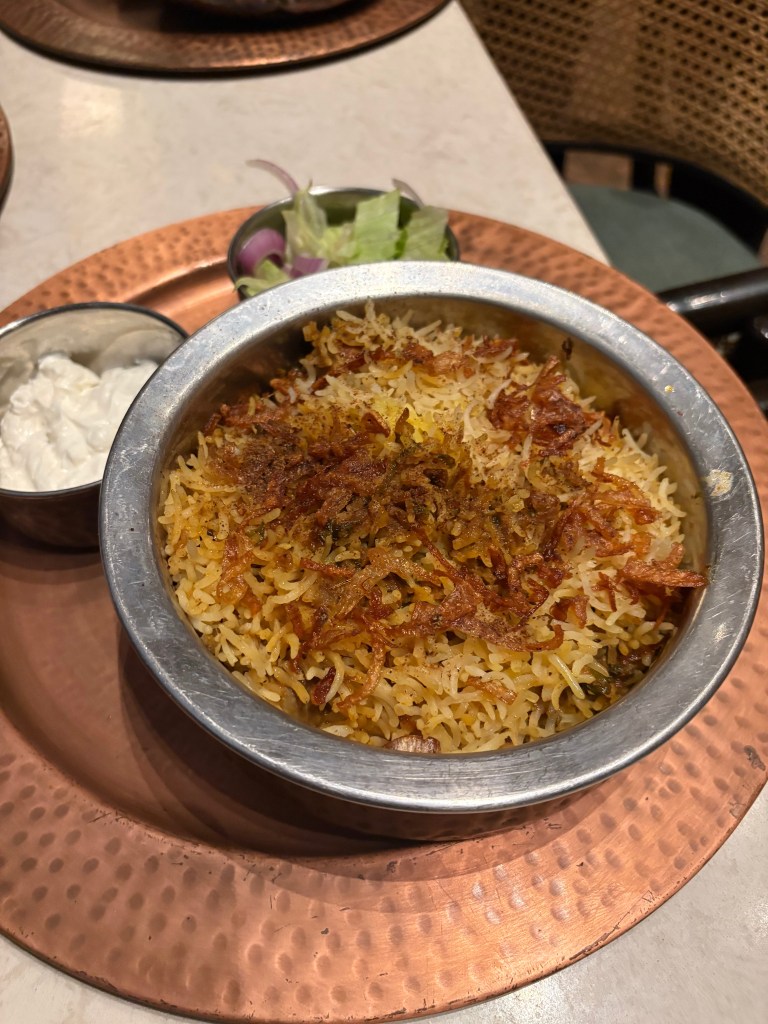
For Those Who Keep Vegetarian Court
A lesser establishment would have offered the non-meat diner a token gesture, something perfunctory, something apologetic. Governor Sahab, characteristically, does no such thing.
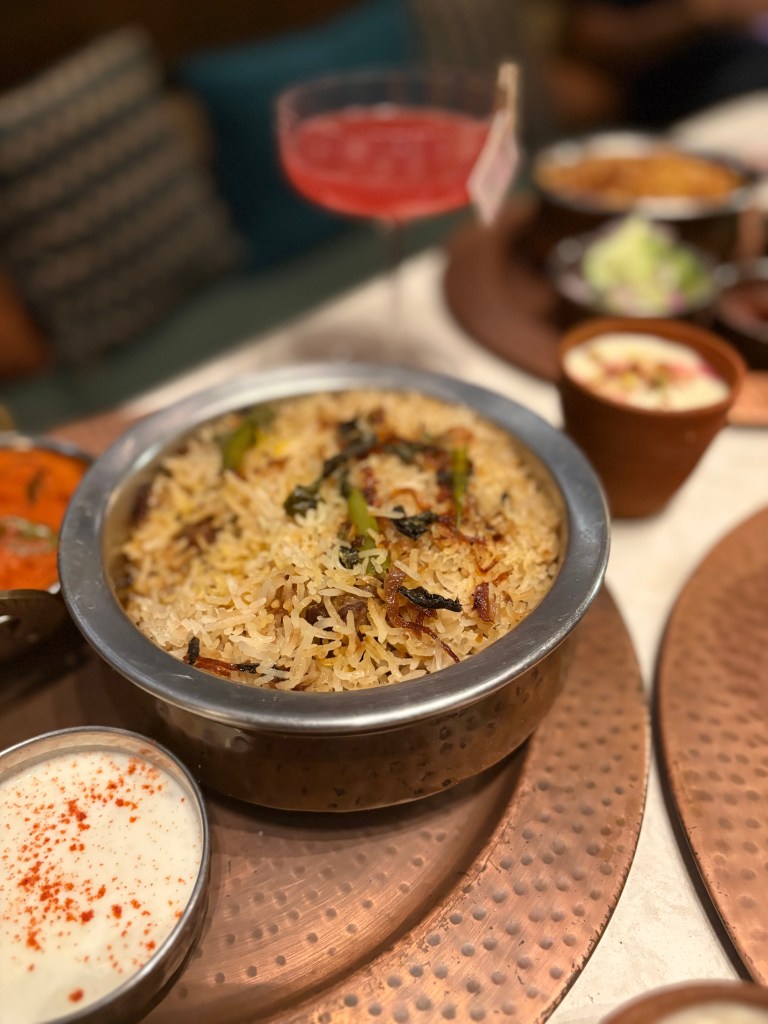
The Afghani Kabuli Palaw is a revelation and a gentle rebuke to all who have ever dismissed the vegetarian biryani as a lesser article. Sweet-savory rice with chickpeas, vegetables, and dry fruits, it carries the warmth of Kabul’s bazaars and the open-handed generosity of Afghan hospitality. It is, in the very best sense, the dish of a people who know how to feed a stranger well.
The Truffle Mushroom Special is Governor Sahab at its most delightfully anachronistic, dum-style mushroom breathing truffle aroma, one foot firmly in the Mughal tradition and the other gesturing with quiet confidence toward a more contemporary sensibility. A sahib of 1923 might have raised an eyebrow; a diner of discernment in the present age will simply raise his fork.
The Jackfruit Biryani, kathal, that most faithful of vegetarian understudies, completes the ensemble with rustic, heartland sincerity. Plant-based it may be, but in character and conviction, it yields nothing whatsoever to its meat-laden companions.
The Sweetness at the End of Empire
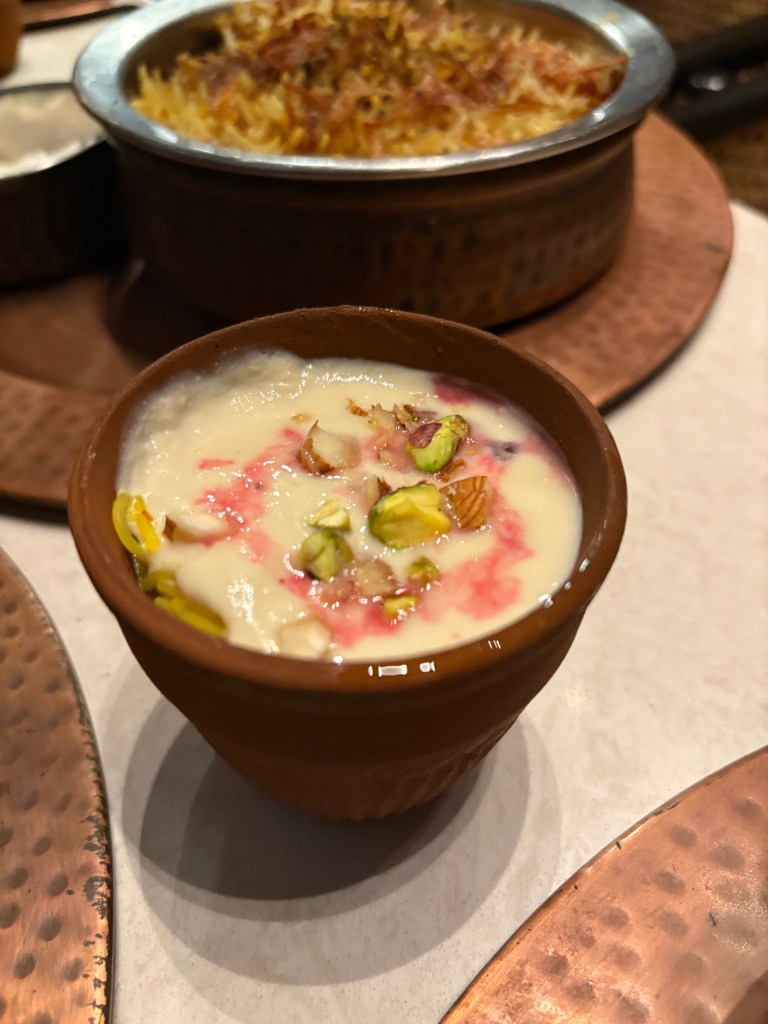
Every great civilisation, it has been observed, deserves a worthy conclusion. The Fruit Rabri Falooda, rabri, fresh fruits, falooda sev, and rose syrup assembled in one magnificently generous vessel, is precisely that. It does not arrive so much as it makes an entrance, and one does not consume it so much as succumb to it. It is the culinary equivalent of a long, unhurried postprandial stroll through a moonlit garden, the sort of ending that renders all further conversation unnecessary and, indeed, rather beside the point.
A Closing Dispatch
The World of Biryani at Governor Sahab is, in the end, a work of gastronomic scholarship dressed in the clothes of a dinner. It does not merely serve rice; it conducts a grand tour of a dish that has defined civilisations, crossed oceans, survived the fall of courts, and outlasted the empires that first perfumed it into existence.
Kipling wrote that the East is the East, immovable, eternal, irreconcilable with the West. He was, as usual, half right. The East is indeed immovable. But it has always been gloriously, generously, magnificently willing to share its table.
Come hungry. Come curious. Come, if you can manage it, with a companion worth the occasion.
The dum will not wait forever.

 Just Nashik