
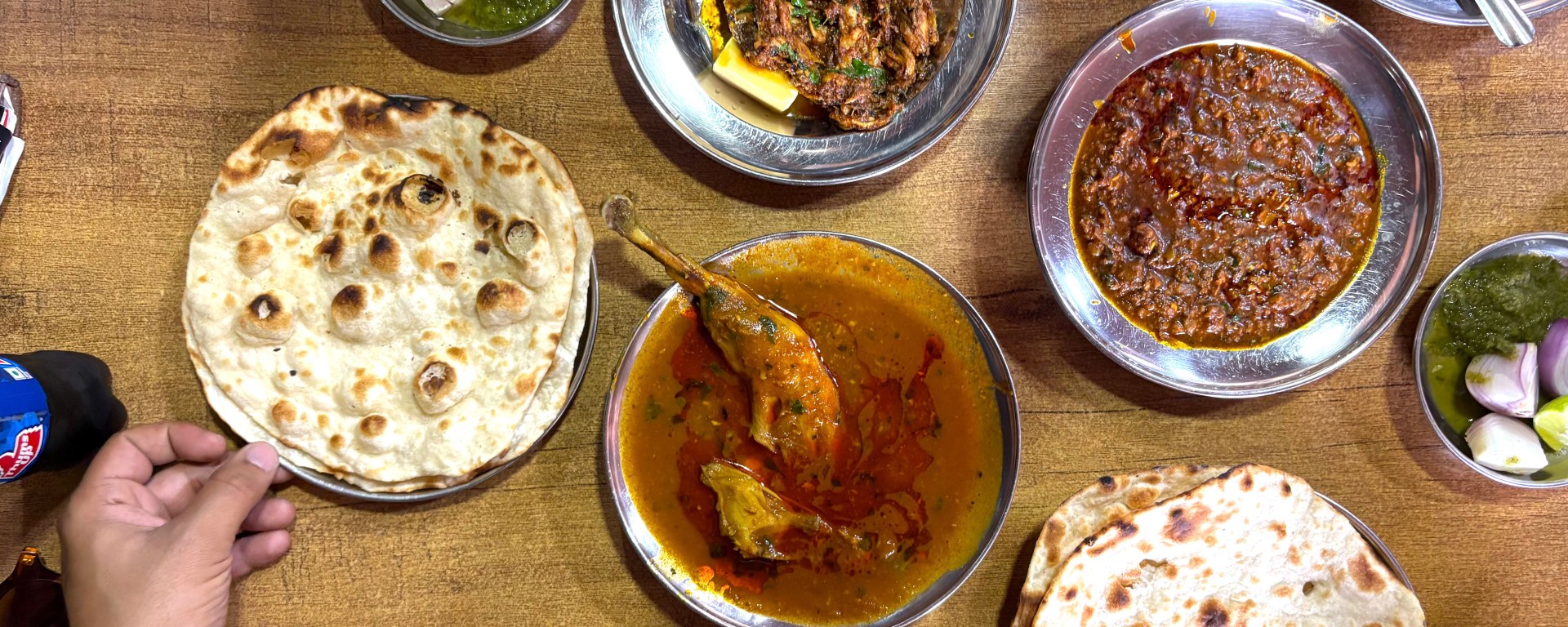
There’s little point romanticising food with hashtags and filters when there exists an entire ecosystem of culinary heritage simmering quietly in the backstreets of Nashik. These establishments aren’t glamorous, they aren’t trying to be; what they offer instead is substance—a sense of rootedness, of food prepared with memory, intuition, and no regard for fleeting trends. This is not a homage, but a critique. One rooted in taste, time, and truth.
Take Sugras Canteen, tucked inside the working-class lanes of Satpur MIDC. You’ll miss it if you blink, but you’ll remember it if you taste. The family that runs it doesn’t advertise—they don’t need to. Their CKP-style fish fry, cooked on a flat tawa till golden with barely-there marination, and the soulful mutton curry—layered, spiced with restraint, and intensely comforting—speak in flavours older than signage. It’s not a place you’d take someone to impress them. But it’s exactly where you’d go to impress upon yourself how good food can taste without pretense.


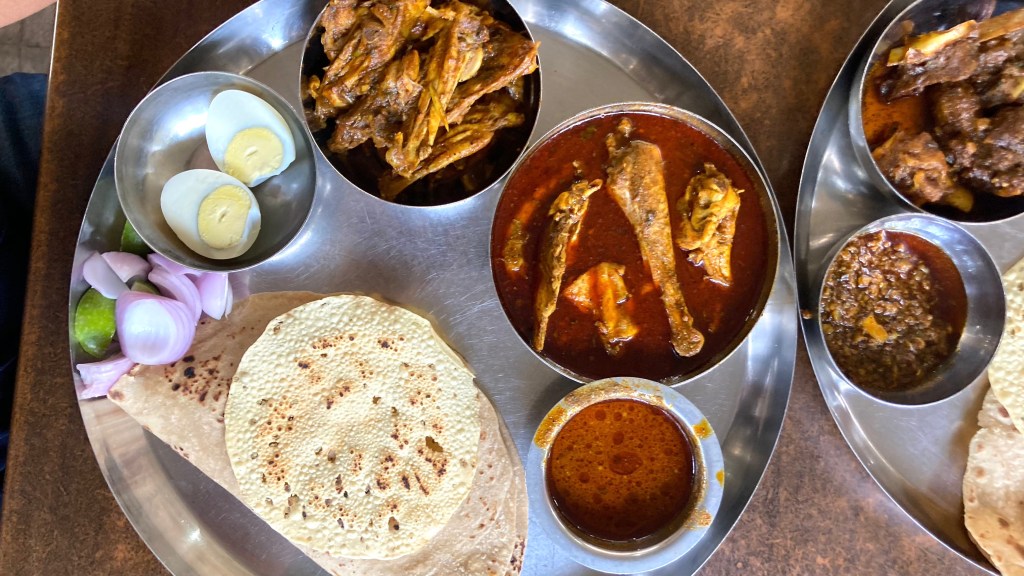
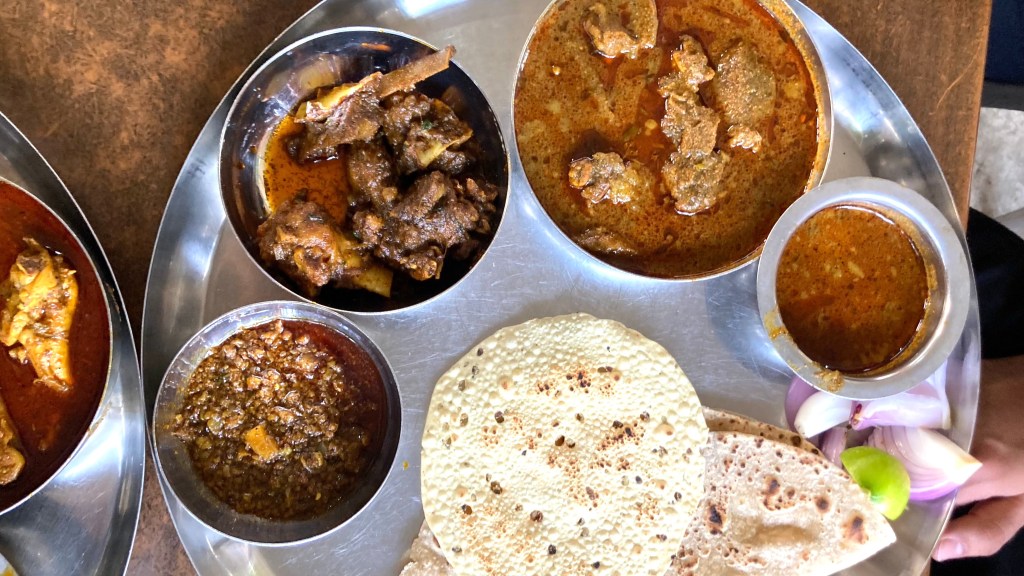
Over on Pipeline Road, Vinayaka Hotel makes no attempt at culinary theatre. The thali arrives without ceremony: black masala–coated chaap and nalli pieces sitting in a homestyle curry, flanked by a scoop of kheema, a boiled egg, and an optional portion of mutton fry. You get a choice between chapati or bhakri, and a papad that cracks with just the right resistance. The meal is both intense and unhurried—a tribute to the domestic kitchens of Sinnar, where this recipe finds its roots. Nothing is overthought, and yet everything tastes considered.
If your taste leans towards the assertive, there is Pappu Da Dhaba at Malegaon Stand. Founded in the 1950s and proudly unpolished, it serves a Dry Butter Chicken that is a complete departure from the North Indian classic. Here, there’s no tomato, no cream, no sweetness. What arrives is a plate of shredded chicken—slow-cooked, then caramelised in a spice-heavy reduction that clings to every fibre of the meat. It’s robust, hot, and unapologetically dry. The dish doesn’t beckon with butter; it holds your attention with character.

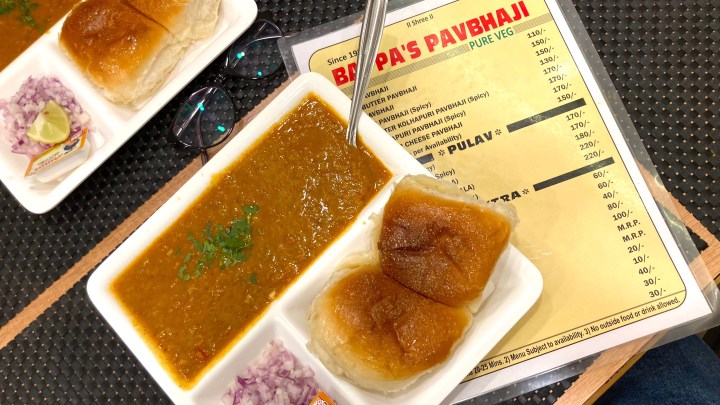
Further down the city’s spine, near the Red Cross on Main Road, Bappa’s Pav Bhaji continues to hum with the same nostalgic rhythm it did in the 1970s. It’s a simple place with a singular focus: pav bhaji and tawa pulao. The butter isn’t delicately brushed; it’s ladled. The bhaji doesn’t aim for symmetry; it settles like lava. It is a dish designed not for photographs, but for memory. Generations have grown up eating here, and their affection is justified. Bappa’s isn’t just a vendor—it’s a taste archive.
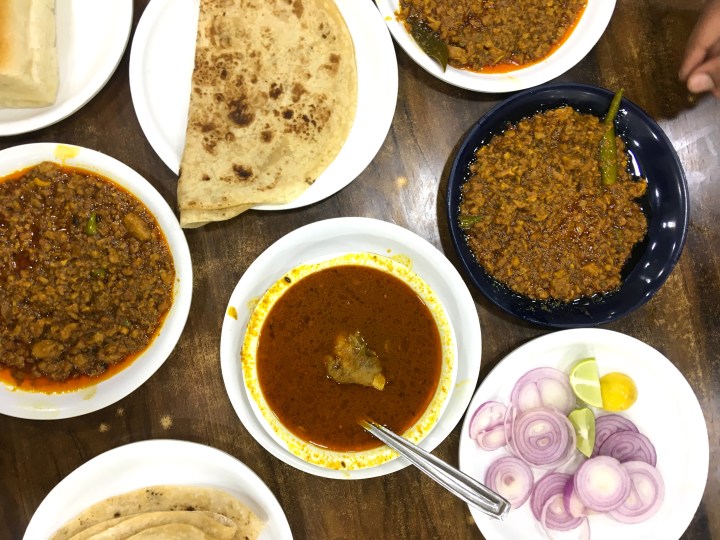
Then there’s Konkani Darbar in Bhadrakali, Old Nashik. Arrive before 11 AM or leave disappointed—the kheema is only served in the mornings and disappears fast. It’s a Muslim-style preparation: oily, earthy, and robust without being overwhelming. The coarse mince is cooked patiently, served with either pav or chapati, and carries the kind of quiet confidence only found in food that doesn’t apologise for its identity. The paya soup, equally unpretentious, offers a deep, marrow-laced broth that soothes as much as it strengthens. The space is minimal, and the service indifferent, but the food rewards your patience.
These establishments don’t clamor for validation. They have no time for it. They are too busy cooking, serving, repeating. Nashik’s culinary soul isn’t in what’s trending; it’s in what’s still being tended to quietly—often before dawn, without metrics, hashtags, or influencer reviews.
You’ll find it in the warm weight of pav in your hand, in the sting of spice that lingers a little longer than expected, in the consistency of a dish that hasn’t changed in fifty years. These are the city’s true kitchens—not curated, not conceptual. Just honest.
And in that quiet repetition, a city’s true culinary soul is preserved.

 Just Nashik